
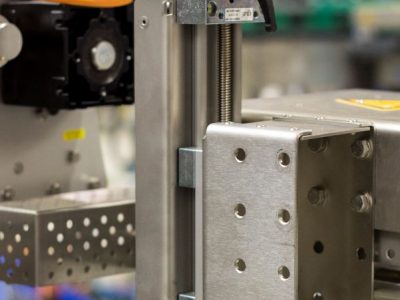
If you are looking for a simple linear adjustment for sensors or cameras that are usually secondary, you will find a number of possible solutions. They should be simple, reproducible and cost-effective. What is the right system for me if I want to integrate it without great design effort? What are my requirements? If a […]
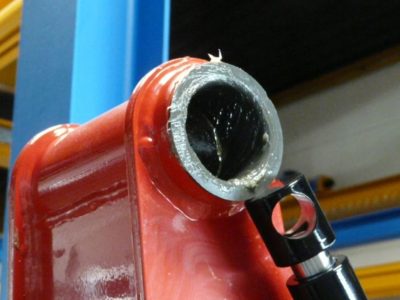
Despite all the greatly varying plain bearing application profiles – from engine block bearing to mountain bike pedals – there is one thing in common: the best lubrication is lubrication that need not be applied. It is often problematic to get grease and oil where they are needed and keep them there. Ensuring that the […]
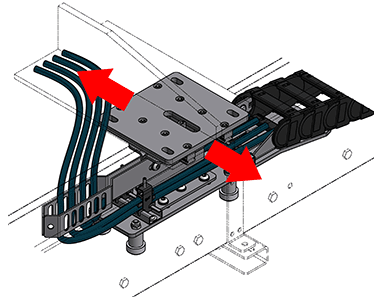
Modern energy chain systems can achieve travels of 1,000 metres and more. But long travels are just where it is difficult to ensure that the guide trough is mounted exactly parallel to the crane rail, for instance. Deviations of more than +/-5 mm over a distance of 100 metres and more are difficult to avoid. To ensure that the energy chain runs over itself cleanly on the two outer belts even on long travels, a compensation unit was developed.
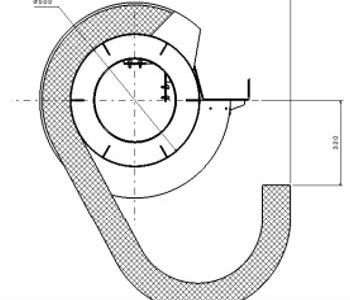
Discussions of strain relief frequently include references to relative motion. Consideration of this motion is the basis for optimum strain relief. If a cable is on the energy supply’s neutral axis, the cable length is the indicated chain length. However, there is often one cable in the inner radius and one in the outer radius […]
Maximum vehicle efficiency requires harmonised thermal management. Optimum operating temperature ensures efficiency and thus the lowest consumption and associated emissions. Coolant plays an important role – it cools, provides corrosion protection and prevents frost. Coolant pumps, regulators and valves distribute coolant throughout the vehicle, sending it where it is needed. Find out more here. In […]