
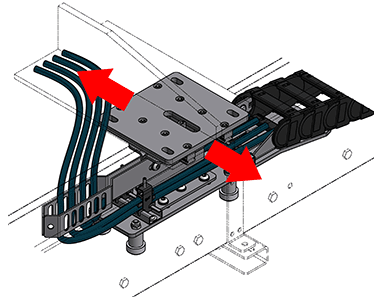
Modern energy chain systems can achieve travels of 1,000 metres and more. But long travels are just where it is difficult to ensure that the guide trough is mounted exactly parallel to the crane rail, for instance. Deviations of more than +/-5 mm over a distance of 100 metres and more are difficult to avoid. To ensure that the energy chain runs over itself cleanly on the two outer belts even on long travels, a compensation unit was developed.
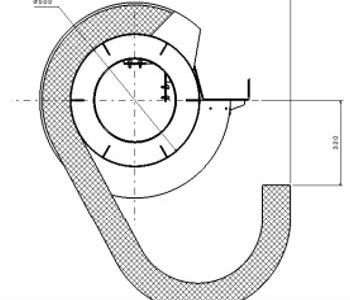
Discussions of strain relief frequently include references to relative motion. Consideration of this motion is the basis for optimum strain relief. If a cable is on the energy supply’s neutral axis, the cable length is the indicated chain length. However, there is often one cable in the inner radius and one in the outer radius […]
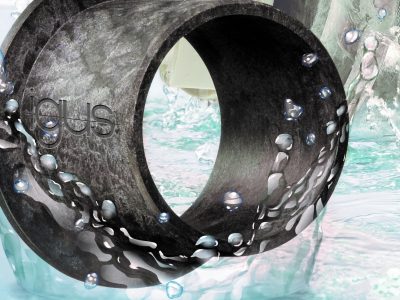
Maximum vehicle efficiency requires harmonised thermal management. Optimum operating temperature ensures efficiency and thus the lowest consumption and associated emissions. Coolant plays an important role – it cools, provides corrosion protection and prevents frost. Coolant pumps, regulators and valves distribute coolant throughout the vehicle, sending it where it is needed. Find out more here. In […]
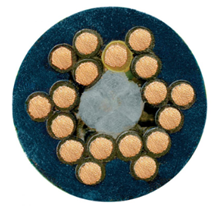
Stranding means wrapping the cores of multi-core cables around a centre element. During cable design, stranding plays a decisive role with respect to movement. There is a fundamental distinction between cores wound in bundles and cores wound in layers. We will examine both of them more closely below. What are cores wound in layers? When […]
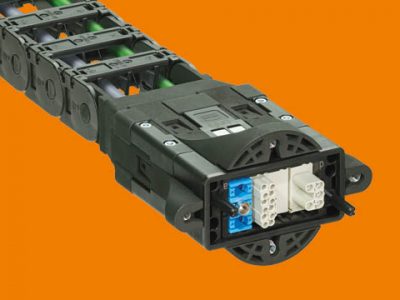
How can energy supply systems be made ready to plug and play? The more complex the system, the more extensive the functions of the machine, and the more effort and cost often associated with the energy chain. For this reason, complex systems often require many plug-in points that must be produced and coded according to polarisation – the ideal solution is the Module Connect adapter.