
3d printing
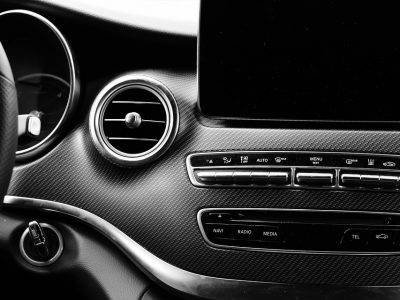
The automotive industry requirement profile for materials used in vehicle interiors is continusously becoming more stringent. These requirements can be found in the OEMs specifications and are based on the legal requirements.
Every machine contains moving parts that cause friction during operation. In contrast to metal, components made of wear-resistant iglidur polymers do not require additional lubrication (because they contain solid lubricants) – however polymers cannot dissipate the electrostatic discharge caused by friction. In semiconductor and electrical engineering, a static discharge through components can cause permanent damage […]
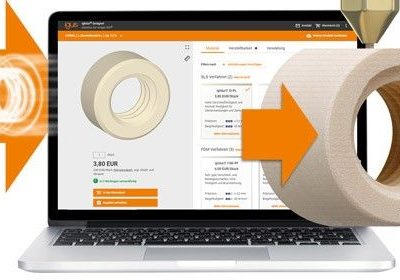
The two most common reasons for manufacturing drive and lead screw nuts using 3D printing processes are the construction of functional prototypes and the production of complex custom nuts. In product development, several models are sometimes designed and tested – with the rapid prototyping process, the production of near-series variants and customisations can be carried […]
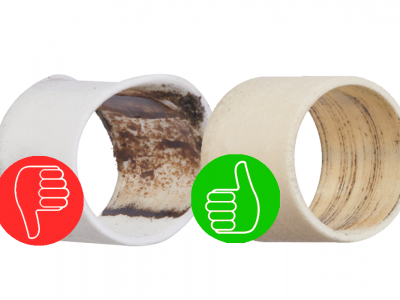
3D printing is ascendant across industries and materials, not only in product development, but also in industrial manufacturing processes. But if the freedom granted by additive manufacturing is to realise its full potential in the industrial environment, 3D printing materials must perform just as well as their mechanically processed counterparts. igus has dedicated itself to […]
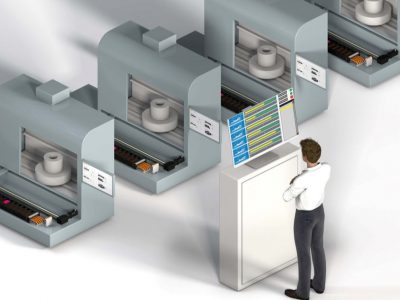
You need a metallic component. You can quickly import the software model and the part comes out of the 3D printer in no time at all. Swarf doesn’t occur. There is practically no waste. This quickly leads to the question: can 3D printers replace classic machine tools? This blog examines this question for three relevant […]