
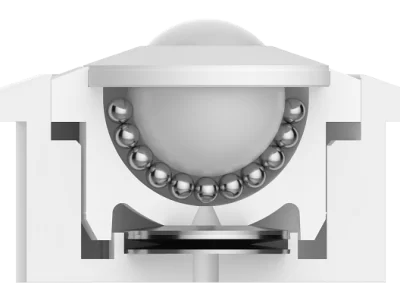
Our ball transfer units can be used to move fragile or heavy goods easily and in all directions without much effort. We use various design concepts for this. In addition to injection-moulded housings with housing pads and ball beds, we also offer a variant with a sliding insert specially designed for higher loads and shock […]
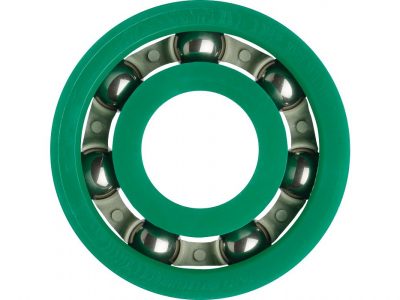
In keeping with our motto, "xiros® goes green", we are launching a ball bearing that contains 97% regranulate. We are moving in an environmentally friendly direction, since sustainability is becoming increasingly important, especially in industry. The reason is obvious, since industry is among the top three CO2 emitters worldwide.
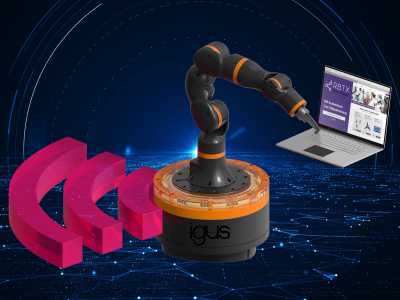
Effective immediately, igus offers the ReBeL service robot – also as a smart version. At €4,970 and only around 8 kilogrammes, the plug-and-play variant is one of the lightest cobots on the market.
The development of electric vehicles (BEV, PHEV, HEV) and vehicles with fuel cells (FCEV) is in vogue thanks to their low-emission use. Statutory requirements and higher energy costs are the reason why OMEs and suppliers place particular emphasis on the sustainability and lightweight of their designs when developing new products.
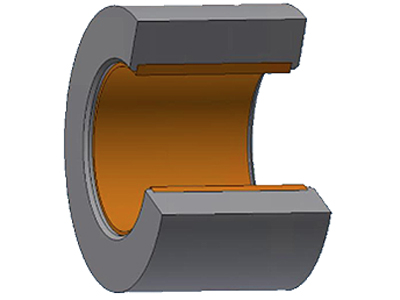
There are many reasons for fixing bushings in the axial direction. If excessive forces act in the axial direction or external influences have a negative effect on the press-fit of the bearings, bushings are at risk of being pushed out of the bearing point. As a result, the shaft rotates in the housing hole “without […]